


Sunday Service 3rd May
Honour, and knowing our place
3/5/26
Call to worship
Hymn 782: Lord of life, we come to you
Time for all
Hymn 791: Our God is a God who makes friends
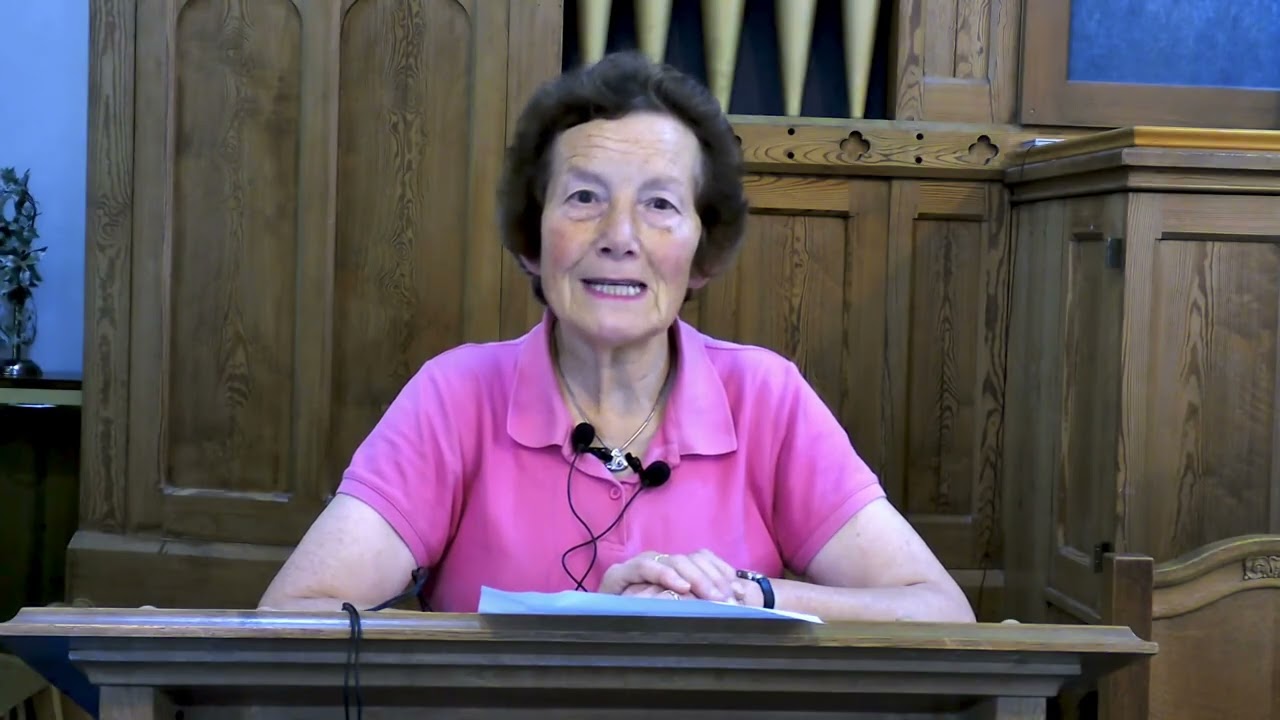
Reading: Luke 4: 14-30 Elaine
Prayer
Hymn 112: God, whose almighty word
Sermon
Prayer
Hymn 348: Praise the One, who breaks the darkness
Benediction
Welcome to our meditation for 3rd May.
This week in our reflection we are looking at honour, who we think we are and what we think we deserve from God.
This is a tough one because we don’t often look at this in our life.
But we have lines in the sand which no one can cross, and often we don’t even realise that we have them until someone crosses them.
But what if it is God that is crossing them? How do we then react?
Well we will look at that after Elaine leads us in our prayer and reading for today.
Sermon
Jesus lived in a society that lived by an honour system.
It is difficult to understand if you don’t live in it. And I don’t pretend to be an expert in it.
But from my understanding of it...in their society honour was a limited commodity. People could gain it or lose it.
If you were shamed by someone, then you lost it.
If you protected someone or saved someone then you gained it.
The more honoured you had then the more respected you were, the more powerful you were. And it wasn’t something that was internally judged, it was something that society judged you on.
And people reacted on what was happening to their honour, or how they saw their perceived honour was going.
We see this in very young children.
You have a baby toddler and they are coping with the idea of having a new baby brother or sister.
Initially they are excited because this is a new toy for them to play with.
But then, in their head, they get the idea that love is a limited commodity. In their eyes it is judged by how much time their parents spend with them.
And when the new baby comes along they believe that their parents love them less and the new baby more.
So they often react violently against that.
Now we might see that as silly.
Except that there is a whole thing about husbands being jealous of their baby children, who feel they are ignored and they often react badly. Why? Because in their eyes love is a limited substance.
In our reading today...initially Jesus was bringing honour to his village.
He was developing a good reputation for healing and being close to God.
This would reflect very well on his old village and they would be basking in the glory, gaining honour as the place where such people are nurtured and grow up.
So when Jesus arrives back in his village he is given a place of honour. He is meant to tell his village, and all these people that know him so well, about how much he is indebted to them. Jesus gives them honour and they reply by giving him honour.
To do otherwise is to stoke up resentment and even violence.
Even today we hear of honour killings. Where a woman or girl has dishonoured the family in some way, tainted the family in some way, and the family feels that the only response is to regain honour by rejecting the person and their values completely
...sometimes by killing them.
In our own society we have families who feel so angered by what one of their family has done that they will effectively exile that mender of the family.
They will use phrases like, ‘They are dead to me.’
So when Jesus comes into the village and they give him a place of honour, they expect in turn to be honoured by Jesus in return.
If Jesus has healed in other places then how much more will he honour his own people?
And initially it goes so well.
Jesus gives a passage about the coming work of the God and tells them that in front of them, this passage has become real. God is working before them.
And so the villagers are expecting great wonders to be performed in front of them.
And then Jesus starts telling them that nothing will happen before them, no miracles, no healing, no exorcisms.
In their eyes, Jesus is telling them that they are not worthy of God’s blessings.
Suddenly they become angry.
Who does this upstart think he is?
We know him as Joseph’s boy, nothing special, and he dares to condemn us and judge us?
And Jesus’ response inflames things.
‘A prophet is never welcomed in his home town.’
In their eyes Jesus has crossed a line.
It is one thing for him to say that God doesn’t see them as worthy of healings done in front of them; it is another to say that they are like the people of old who rejected the word of God given by the prophets. Who didn’t listen to the prophets and were banished into exile by God for their unfaithfulness.
They react violently, try to kill him.
The miracle is that he walked away unscathed.
But what has that to do with us?
We may not live by the same honour code as they did, but unconsciously we do live by the same expectations.
We often live in fear.
Fear that love is limited, that there is only so much love in the world and it is a limited commodity.
We may believe that God loves us; well we may hear from the minister that God loves us, but do we believe it?
And if we believe it then how much does God love us?
I have a wonderful granddaughter who totally believes that her granddad loves her.
And by that...it means that whenever she wants to play then granddad is there.
Whenever she wants a sweet from granddad’s secret horde of sweets then she will get one.
Whenever she wants to stay up late then granddad will let her.
Because in her eyes the maths is very simple.
If granddad loves her then Granddad will want her to be happy.
If she is sad then granddad will want to comfort her.
If she is sore, for instance she falls and scrapes her knee, then granddad will want to take the pain away.
If she is scared then granddad will want to reassure her.
And you know what; the dangerous part of that is that most of it is true.
But far more complex.
The trouble is that in my granddaughter’s eyes all of it has to be true.
Exclusively.
I was in a shop and this wee boy that I didn’t know fell and started to cry. I instinctively started to talk to him reassuringly.
And suddenly my granddaughter got jealous.
Because in her eyes love/care/compassion is limited.
In her eyes any care given to this wee boy was care that she wouldn’t get as I was using it all up.
If I start to play with any of my other grandchildren then she starts getting a bit angsty. She wants always to be on my team; or rather she always wants me to be on her team. And not on someone else’s team.
She interprets me helping another child, or me being on someone else’s team, as me rejecting her.
Now we might find that silly.
We might find that immature.
But how often are we like that?
Do you know how many people have left churches because someone that they cared about suffered an illness...and that person that they cared about weren’t cured by God?
Do you know how many times I have heard the words, ‘I can’t believe in a God that would allow that to happen to me?’
They take any suffering they face as a sign that God has rejected them.
In their eyes, there is only so much love and they can see that God loves other people, he is looking after them, but their suffering is a sign that God doesn’t love them.
And let’s face it; deep down we know that we aren’t good enough.
It seems that the whole world is embarrassed about Pete Hegseth, Secretary of War in America who loves to wear his Christianity and use it for justification to fight wars around the world. A few weeks ago he created a pray that he thought was from the Bible and it turned out it was a made up quote from a film Pulp Fiction.
At least we are better than that...and yet if I gave all of us a pen and piece of paper and asked us to make up a prayer based on quotations from the letter of Galatians...how many of us would be able to do that?
But then our faith isn’t judged on our Bible knowledge.
What instead if I asked us to recite the first ten things we did last week to help someone cope with their poverty, or deal with grieving of a recent death, or visit someone in hospital or prison, or counselled a child who was taking drugs, or helped a family that was going through relationship struggles.
How many of us would be comfortable with that conversation this morning?
So if it’s not our knowledge that gets us into God’s good books,
if it’s not our actions that gets us into God’s good books,
then what are we doing to deserve God’s love?
We are not so different from the people of Galilee; we will be God’s people and God will love us...not those others, but us.
We are not so different from my granddaughter, I will be granddads girl and granddad will love me...not those others, but me.
And we are so insecure about that because we know it’s not totally true.
We are so insecure about that...that we fail to find any reassurance from the real truth.
My granddaughter needs to see the full truth.
My love is not limited to her. And loving other people doesn’t mean that I love her less.
Also loving her does not mean she gets her own way.
Maybe I love her so much that I want her character to be less selfish, more compassionate to others. I want her to love others the way I love others.
I want her to live a life not of fear of losing my love, but confidence that my love can be a springboard for her growing.
That she can take risks that help her develop. That she can move out of her comfort zone because Granddad is there to catch her.
The people of Nazareth needed to see the full truth.
God’s love is not limited. And loving others didn’t mean loving them less.
Also God loving them didn’t mean that they got a free pass on whatever they were doing.
Maybe God loved them enough that God wanted their character to be less selfish, more compassionate; wanted them to love others that way God did.
The examples Jesus gave are very important.
God heals a widow’s son...but not just any widow’s son. The woman wasn’t even part of the country, probably didn’t have a religious education, probably didn’t have a faith of any standing.
When her son dies she blames the prophet.
It is because the prophet is about and God is watching him so he sees her and all her sins and so punishes her.
If the prophet wasn’t about God wouldn’t care, wouldn’t have noticed what she was doing.
To this person that feels God is judging her, punishing her...that is who God loves.
Or Naaman, the commander of the Syrian Empire who had leprosy, this man had killed many of the faith, he was part of the enemy of the Jewish nation,
who worshiped other gods, false gods.
To this person who didn’t care about God...that is who God loves.
That is the truth they needed to see, we need to see.
It isn’t what we believe that matters.
It isn’t what we do that matters.
God loves them, if they could see that they wouldn’t need miracles and fancy words to reassure them.
They could move forward in that love; that God would be with them in their suffering, whether they were healed or not, whether their problem disappeared or not.
Their assurance would come that no matter what they faced, they didn’t face it alone.
Instead they wanted to control God; if we do our bit then God has to do his bit.
Instead they wanted to limit God; if God loves us then he can’t love them.
And Jesus said no to that, and they got angry,
a natural reaction,
they were losing the god they thought they knew, understood, controlled.
And that was frightening to them...and people do terrible things when they are afraid and threatened.
But now it’s our turn.
What if we can’t control God?
We can’t do our bit to prove to God that we deserve his love?
We can’t say the right prayers or go to the right church, or do the right things so we can control God?
What if we just have to trust?
Trust that God loves us: we don’t need miracles to prove he loves us, or fancy words to reassure us.
What if we can move forward in that love, knowing that God will be with us in our suffering?
It doesn’t matter if we are healed or not, it doesn’t matter if our problems disappear or not.
Our assurance comes that no matter what we face, we don’t face it alone.
It doesn’t matter if we are worthy or not.
It doesn’t matter if we have the right beliefs or not.
God is there with us, because he cares.
What could we do with that faith?
Let us pray
Heavenly Father,
It is so easy to want to be in control.
The world is very uncertain, the world is very scary.
We know we can’t control the weather and because of that we have winter storms that freeze and summer winds that create huge forest fires.
We can’t control the nations, and because of that we have wars in places we have never been to and sometimes never heard of.
But we see the prices in the shops rise and the cost of energy soar.
We can’t control the problems that others make us confront.
The worries about those we love and the illnesses they face.
Or debts that are growing in their lives.
Or stresses within their relationships.
Maybe if we could control you.
If we say the right prayers, know the right Bible verses, understand the right theologies, if we do all the right things then you would love us, you would protect us, you would help us.
Wouldn’t you?
Because we would be your people...and don’t you love your people?
But even that wouldn’t reassure us, because we can’t always be good enough.
Would you punish us for walking by that beggar in the street?
Would you reject us because we ignored that advert on the TV for that charity for the homeless, or the starving in Africa, or for the displaced in Palestine?
Would you turn us away because we didn’t check up on our neighbour, or turned a blind eye to that couple who were screaming at each other in the street?
When we aren’t in control then we get frightened.
Help us to see the truth that sets us free from fear.
Help us to listen to your Son when he tells us of those you love.
The woman who feels she is facing her problems alone, who feels she hasn’t enough to get by.
The man who feels isolated and abandoned, who feels all his power has drifted away.
They are the ones that you love.
And the arrogant and confidence and entitled?
If they saw their true plight then they would see that you love them too.
Help us to see that we are loved.
Help us to live our lives reflecting that love.
So that those around us may feel our love, Your love ..and feel the hope they need.
Amen.







Comments